
News
Behind the Headlines
Two-Cents Worth
Video of the Week
News Blurbs
Articles
Testimony
Bible Questions
Internet Articles (2015)
Internet Articles (2014)
Internet
Articles (2013)
Internet Articles (2012)
Internet Articles (2011)
Internet Articles (2010)
Internet Articles
(2009)
Internet Articles (2008)
Internet Articles (2007)
Internet Articles (2006)
Internet Articles (2005)
Internet Articles (2004)
Internet Articles (2003)
Internet Articles (2002)
Internet Articles (2001)




Democrats
cut $19 billion in college loan subsidies
to banks that issue student loans. Transfer $18
billion to increase new Pell Grant entitlements.
The
College Cost Reduction Act of 2007
just enacted by the House of Representatives is a virtually free ticket
to college for low-income college students who end up in public service
jobs. The College
Cost Reduction Act of 2007 contains a forgiveness clause that waives
repayment of student loans for graduates who choose public service careers.
 The
public sector is where the bulk of poverty-raised college graduates ultimately
seek employment: in city, county, State or federal government jobs, as
school teachers or social workers, or in a cornucopia of other "public
sector" jobs including police officers and librarians.
The
public sector is where the bulk of poverty-raised college graduates ultimately
seek employment: in city, county, State or federal government jobs, as
school teachers or social workers, or in a cornucopia of other "public
sector" jobs including police officers and librarians.
As it becomes even easier for low-income students to go to college at the expense of the middle income taxpayers, it will become increasingly more difficult for slightly more affluent working class students—who don't qualify for Pell grants—to go to college because the funds that were set aside to guarantee the repayment of their student loans—if they default—were hijacked by the Democrats.
The College
Cost Reduction Act of 2007 will deny the children of many working
class families a rung or two higher up the economic ladder than the poverty-class
a college education by diverting the student loan subsidies that guaranteed
the repayment of their loans into the new entitlement programs for the
poor. 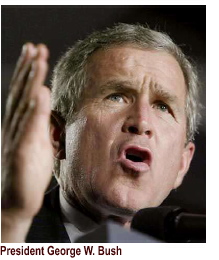 The
argument of the Democrats that the new entitlement does not cost anyone
anything since the money is being diverted from a subsidy program already
in existence is nonsense since the taxpayers are footing the bill everytime
anyone who has received a student loan defaults on it. The federal income
taxes the working class currently pays will subsidize the college education
of the poverty-class students whose parents' earnings do not contribute
to the tax base.
The
argument of the Democrats that the new entitlement does not cost anyone
anything since the money is being diverted from a subsidy program already
in existence is nonsense since the taxpayers are footing the bill everytime
anyone who has received a student loan defaults on it. The federal income
taxes the working class currently pays will subsidize the college education
of the poverty-class students whose parents' earnings do not contribute
to the tax base.
Just to recap what happened with the passage of the The College Cost Reduction Act of 2007, let me reiterate. If the Senate bill 1642—The Higher Education Access Act of 2007—clears the hurdles in the Senate and if President George W. Bush signs the bill into law, the entire $19 billion trust fund that guarantees 89 lending institutions around the country that the student loans they approve will be paid back will vanish overnight. It will no longer exist. That means working class students who would otherwise be eligible for a student loan won't get one because Sallie Mae won't have the ability to guarantee repayment to the lenders because the trust fund that guarantees the loan will no longer exist. Instead, $18 billion of that $19 billion trust fund will be given to the education bureaucracy to:
• reduce the interest rates on federally-subsidized student-loans
• use the remaining billion to reduce the deficit to show austerity
• offer loan forgiveness to graduates who take public-service jobs
• cap maximum repayment of loan to 15% of the student's income
• raises the amount of the Pell grants available per year by $1,000
• $50 million to improve teacher skills at minority-serving colleges
• $300 million to companies who improve college access and retention
• $375 million for scholarships to students to teach high-need subjects
• raises the Pell grant eligibility threshold from $20K per year to $30K per year
• give $4 thousand per year scholarships to college students majoring in education who agree to teach hard-to-staff subjects like math in low-income schools
Democrats who
praised The College Cost Reduction Act of 2007 as the most
important legislative effort to help families pay for college since the
GI Bill was passed in 1944 to benefit veterans at the end of World War
II, created the legislation as a retaliatory move for the Bush Administration's
cutting billions of dollars from student aid for the poor.  HR
2669 was introduced in Congress on June 12, 2007 by Congressman George
Miller [D-CA] and 31 Democratic cosponsors in what cannot, by any
stretch of the imagination, be construed as a bipartisan measure (even
though 47 liberal Republicans crossed the aisle to vote with their liberal
colleagues), fast-tracking HR 2669 to passage.
HR
2669 was introduced in Congress on June 12, 2007 by Congressman George
Miller [D-CA] and 31 Democratic cosponsors in what cannot, by any
stretch of the imagination, be construed as a bipartisan measure (even
though 47 liberal Republicans crossed the aisle to vote with their liberal
colleagues), fast-tracking HR 2669 to passage.
To protect the
measure from amendments in the Senate version of the bill: The Higher
Education Access Act of 2007 (S.1642), which was introduced in the
Senate on June 20 by Sen. Edward M. Kennedy and 10 liberal cosponsors,
the House Democrats moved the bill under a special budget procedure
that prevents S.1642 from a Senate filibuster. 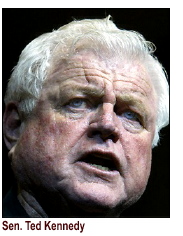 That
means the Republicans with their moderate allies on the other side of
the aisle can't stop the legislation from being passed in both Houses
of Congress. It is unlikely that the Democrats will be able to override
a presidential veto. However, I suspect the liberals in the House and
Senate will offer Bush an Iraqi War concession to keep him from
killing The Higher Education Access Act of 2007 when it crosses
his desk this fall.
That
means the Republicans with their moderate allies on the other side of
the aisle can't stop the legislation from being passed in both Houses
of Congress. It is unlikely that the Democrats will be able to override
a presidential veto. However, I suspect the liberals in the House and
Senate will offer Bush an Iraqi War concession to keep him from
killing The Higher Education Access Act of 2007 when it crosses
his desk this fall.
The legislation, if and when it is successfully passed by the US Senate and signed into law by Bush will eliminate $19 billion in federal student loan subsidies and divert $18 billion into nine brand new entitlement programs under the guise of reducing the high cost of college. The House approved the measure on Wed., July 11 on a vote of 273 to 149—with 47 Republicans crossing the aisle to vote with the Democrats. Bush, blustering with veto rhetoric threatened to kill the measure if it reaches his desk. Of course, everyone on both sides of the aisle know a bill has never crossed Bush's desk that he wasn't willing to sign.
The House Democrats argued that their bill, The College Cost Reduction Act of 2007, will not cost the taxpayers a dime since their plan merely diverts $19 billion in existing federal subsidies from the banks that issue government-guaranteed student loans, using $18 billion of that money to cut interest rates on federal student loans from 6.8% to 3.4% over five years and increase One billion dollars will return to the US Treasury. Pell grants will increase from $4,310 to $5,200 and income thresholds will increase from $20 to $30 thousand annually.
Pell grants go to poor students who might otherwise not be able to afford college. The College Cost Reduction Act of 2007 was designed to make good on a Democratic campaign promise to help low income families with college tuition money. The problem is they took the money from slightly more affluent students who don't qualify for handouts but do qualify for student loans. The $19 million the Democrats diverted guaranteed those student loans through Sallie Mae and Nelnet (which funds the loans granted by 89 lenders whose student loan repayments were guaranteed under this programs). Those dollars will now be funneled into grants for the poor. They do not have to be repaid. As a result, the children of many low-middle income families (those whose joint earnings are from $35 to $50 thousand per year) may find they're too affluent for a Pell grant but not affluent enough for a student loan for anything more exciting than a local junior college; or an instate university guaranteed not by Sallie Mae but the family home.
When he proffered The Higher Education Access Act of 2007, Kennedy noted that "...[t]oday average tuition, fees and room and board in our public colleges is almost $13 thousand, and its more than $30 thousand at private colleges. Each year, more than 400 thousand talented, qualified students don't attend a four-year college because they can't afford it. At the same time, the buying power of the Pell Grant—the lifeline to college for low-income students—has shrunk dramatically. Twenty years ago, the maximum Pell Grant covered 55% of the costs of a public four-year college. Today, it covers less than a third of those costs. As a result, students are sinking deeper and deeper into student loan debt. In 1993, fewer than half of all students took out student loans to finance their education. Today, more than two-thirds borrow for college."
Today, with
the liberal State bureaucracies firmly in control of the educational system
in the United States, and politicians at both State and federal level
kowtowing to groups like the National Council of LaRaza, the US
Hispanic Chamber of Commerce, the US-Mexico Chamber of Commerce,
the Hispanic Scholarship Fund, the League of United Latin American
Citizens, the Mexican-American Legal Defense and Educational Fund
and scores of other Hispanic advocacy groups, elected officials at both
State and national levels are leveraging government to provide not only
free elementary and secondary school education to illegal aliens in the
United States, but to provide them with college educations as well at
no cost—or at instate student rates.  The
cost for all that liberal largess has to be paid by someone. When the
voters rebel against tax hikes, colleges and universities are forced to
raise the tuition. And, in the end, the working class taxpayer foots the
bills.
The
cost for all that liberal largess has to be paid by someone. When the
voters rebel against tax hikes, colleges and universities are forced to
raise the tuition. And, in the end, the working class taxpayer foots the
bills.
When GOP members of the House fought, first, to send The College Cost Reduction Act of 2007 back to committee for at least a semblance of debate—which would then hit the media, they were shot down in a 229 to 199 vote. When it became clear some form of the legislation was going to pass, Congressman Howard P. "Buck" McKeon argued if the House leadership believed the student loan subsidy program was pork that needed to be trimmed from the hog, the GOP countered that if the Democratic leadership felt an obligation to slaughter the pig, the pork needed to be returned to the larder. McKeon offered a substitute version of the bill that would leave the lender subsidy program with $4 billion to back student loans (instead of none), pay down the deficit with $9 billion, and divert $6 billion rather than give the whole hog to the Pell grant program. Angrily, Speaker Nancy Pelosi denounced the GOP effort, arguing that the $18 billion "...is the cost of six weeks in Iraq."

Copyright © 2009 Jon Christian Ryter.
All rights reserved.